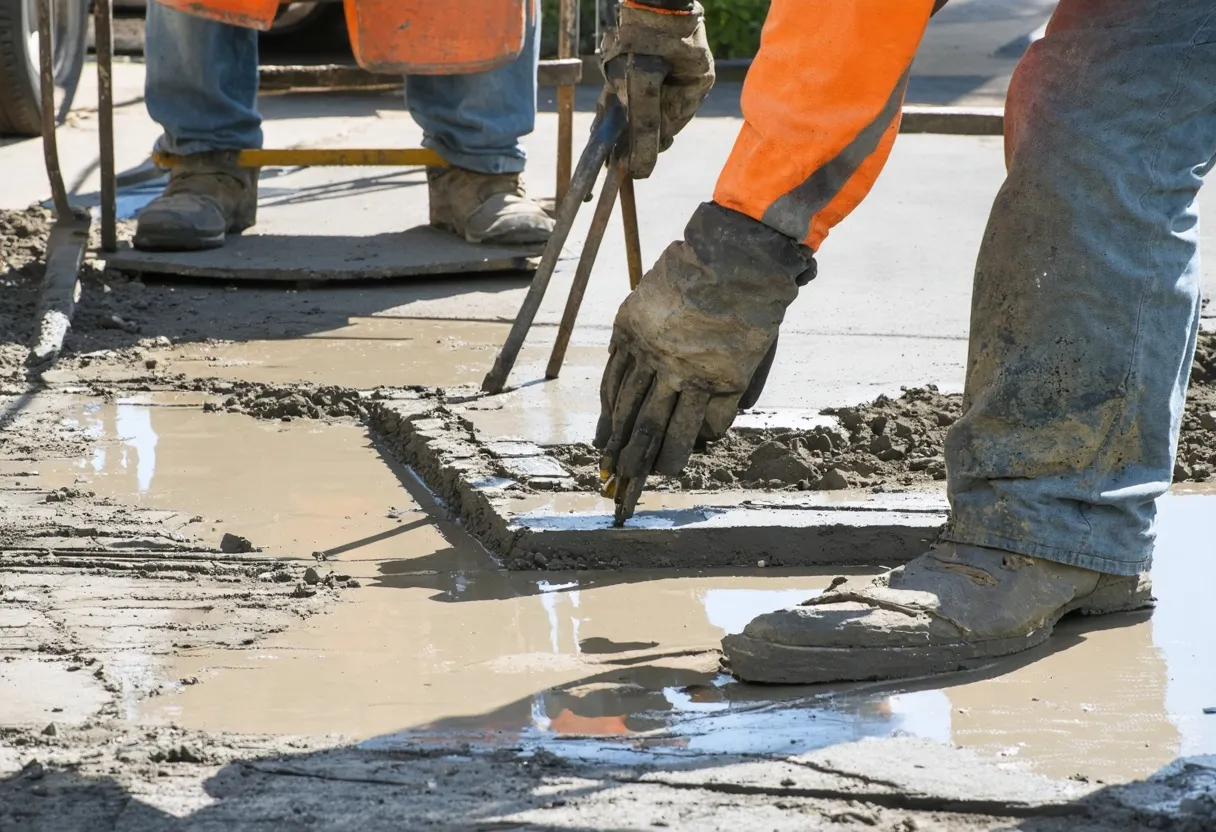
A crack in a driveway, garage floor, or patio slab rarely stays the same size. Water gets into it, Alabama's freeze-thaw swings work at the edges, and by the time you notice one side sitting higher than the other, what started as a cosmetic issue has become a repair job — or worse, a sign of something moving underneath. This page is specifically about fixing existing cracked, settled, or spalling concrete in Birmingham: how a repair gets diagnosed, what actually determines the price, and when a patch is the right call versus when removal and repour is the honest answer.
We dispatch out of 31st Street N in Birmingham and work throughout Jefferson County and the broader Central Alabama area, which is what makes same-day site visits realistic instead of a promise that quietly turns into next week. Every repair — a single cracked slab or a full driveway section — gets a written price range and warranty terms before anyone breaks out a saw, and we offer financing so a repair that shouldn't wait doesn't have to.
Signs Your Birmingham Concrete Needs Repair Now, Not Later
How We Diagnose a Crack Before We Ever Write a Quote
A crew lead inspects the crack's width, depth, and pattern — shrinkage cracking, settlement, and a structural failure all look different up close.
Some cracks stopped moving years ago and are cosmetic; others are actively widening and need to be treated as urgent, especially near a foundation.
Depending on findings, that's surface patching and sealing, mudjacking or polyurethane foam lifting, saw-cut panel replacement, or full removal and repour.
You get a real number and warranty coverage before anything is scheduled — not a verbal ballpark that changes once the crew shows up.
Crack Types We See Most in Birmingham Concrete
Not every crack means the same thing, and treating them all the same way is how a repair fails a second time. Jefferson County's clay-heavy soil expands and contracts with moisture more than sandier soils do, which shows up in specific, recognizable crack patterns.
Shrinkage cracks
These form as concrete cures and are usually thin, straight, and don't run through the full slab thickness. They're mostly cosmetic but still worth sealing, since an open shrinkage crack is an entry point for water that can widen the problem over time.
Settlement cracks
These appear when the soil or base underneath a slab compacts unevenly, and they often come with one side of the crack sitting higher than the other. This is the pattern that typically calls for mudjacking or foam lifting rather than a simple patch — the slab needs to go back to level before a cosmetic fix is worth doing.
Structural cracks
Diagonal cracking, stair-step cracks continuing into brick or block, or cracks that run the full thickness of a slab point to a structural issue rather than surface wear. These get evaluated for whether the underlying cause — soil movement, drainage, or foundation settling — needs to be addressed before any surface repair.
Expansion joint failure
Driveways and patios are poured with joints meant to let concrete move without cracking randomly. When sealant in those joints fails, water gets underneath and accelerates edge crumbling and spalling along the joint line — an easy fix if caught early, a bigger one if it's been ignored for a while.
Active Crack or Fast-Moving Damage? We Answer Day or Night
A crack that's visibly widening, or new gaps and sticking doors alongside a cracked foundation wall, isn't something to sit on until Monday. Our crews run 24-hour response for active or worsening movement anywhere in the Birmingham and Jefferson County service area — get someone qualified assessing the damage on a real timeline, not a callback three days out.
Concrete Repair Questions Birmingham Homeowners Ask
It depends on width, whether it's still moving, and whether water is getting in. A hairline, stable crack can usually wait for a scheduled visit; anything widening, near a foundation, or pooling water is worth a same-day call.
That depends on depth and cause. Surface cracking and minor settling can typically be patched, sealed, or lifted back to level. Cracks running through the full slab thickness, or slabs that have failed structurally, need removal and repour — we'll tell you honestly which category yours falls into during the site visit.
The main drivers are the type of damage, the repair method needed (patching costs less than mudjacking or foam lifting, which cost less than full removal and repour), site access, base condition, and square footage. Every estimate is a written range, provided free, before any work is scheduled.
Yes, we offer multiple payment options so a necessary repair — especially anything foundation-related — doesn't have to wait on your next paycheck. Details are on our pricing and financing page.
Cracking near a foundation gets treated as a priority. If there's active movement, sticking doors, or new gaps around trim, we run 24-hour response rather than a standard scheduled visit, since foundation-adjacent damage can progress quickly.
Repair vs. Removal: How We Decide What Your Slab Actually Needs
The most common mistake we see isn't a crack left too long — it's a repair recommendation that doesn't match the actual damage. Some contractors patch everything because it's the cheapest line item to quote; others push full removal on jobs a targeted repair would have solved for less. Neither approach serves the homeowner.
Our rule is simple: if the crack is stable, shallow relative to the slab's full thickness, and the base underneath hasn't shifted, patching and sealing is the honest fix. If the slab has settled or heaved, mudjacking or polyurethane foam lifting brings it back to level without the cost or disruption of a full repour. Removal and repour is reserved for slabs that have genuinely failed — cracking through the full thickness, extensive settling, or a base that's compromised beyond correcting from the surface.
Because that last option carries the highest cost, it's also where financing matters most. If a written estimate lands on removal and repour, that same estimate comes with payment options so the decision is about what your concrete actually needs, not what you can pay for out of pocket that week. Full detail on estimate ranges and financing terms is on our Birmingham pricing and financing page, and if the damage turns out to be foundation-related rather than a standalone slab issue, our foundation repair page covers underpinning methods and warning signs in more depth.
Free, No-Obligation Quote
See your price range in writing before you decide on anything.
Get Your Written Quote
Tell us about the crack, the heave, or the slab, and a local crew will get back to you the same day.